

Remote Work and Hybrid Work Models
Remote work and hybrid work models are reshaping employment. These changes impact companies and workers worldwide. Let’s explore the benefits, challenges, and examples of these models.
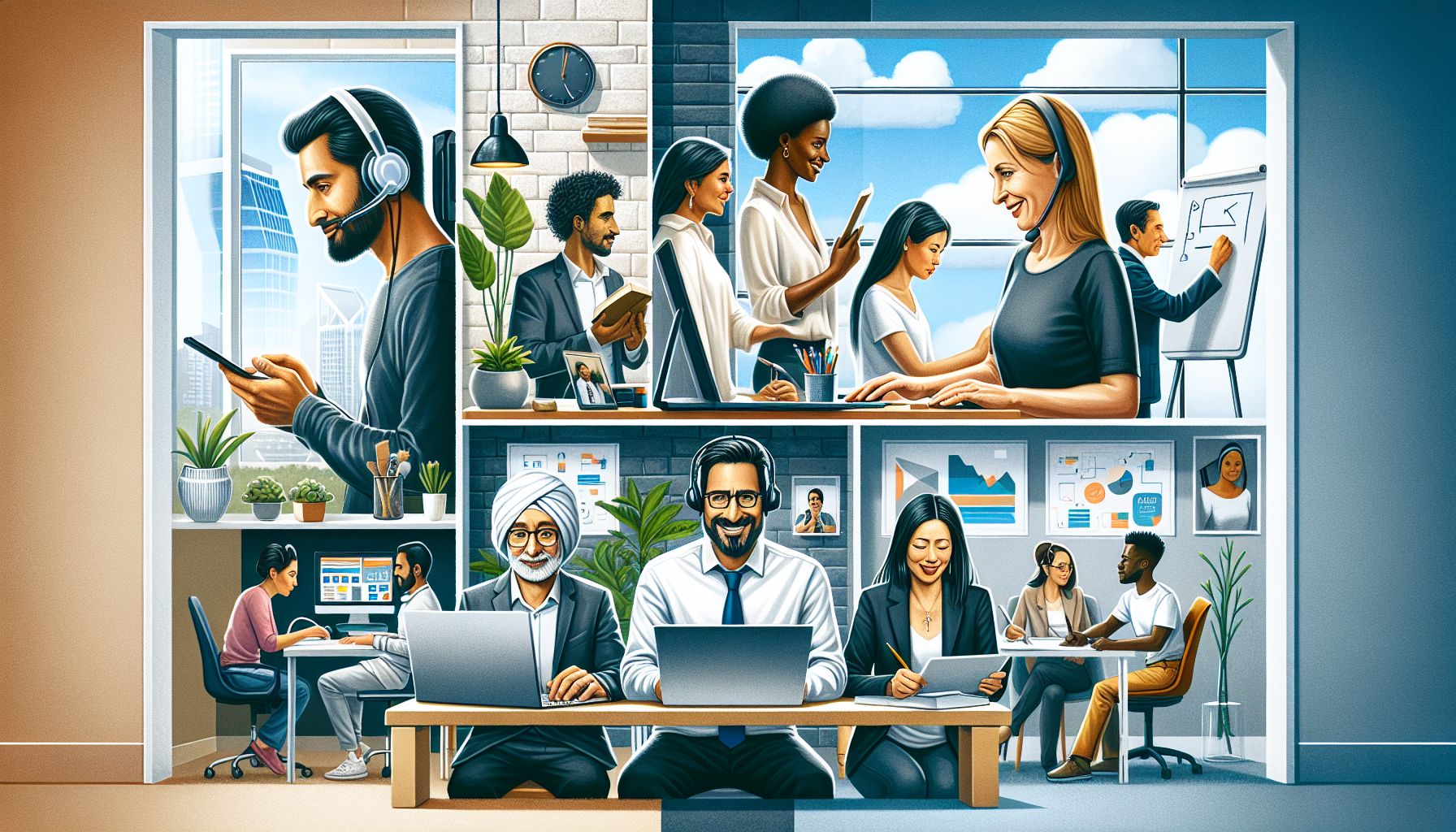
Understanding Remote Work
Remote work allows employees to work from any location. This model gained popularity with the rise of technology and the need for flexible working conditions. Companies find remote work appealing due to several factors.
Benefits of Remote Work
-
Increased Productivity: Employees often perform better without the distractions of an office. Remote work enables a focus-rich environment.
-
Cost-Effectiveness: Businesses save money on office rent and utilities. Employees save on commuting and other related expenses.
-
Talent Pool Expansion: Companies can hire talent from around the world. This diversity enriches the workforce and brings in varied perspectives.
Challenges of Remote Work
-
Isolation: Employees may feel disconnected from colleagues. This can lead to loneliness and decreased morale.
-
Communication Issues: Remote work requires effective online communication tools. Miscommunication can occur without face-to-face interactions.
-
Work-Life Balance: Some workers struggle to separate work and home life. This can lead to burnout if not managed properly.
Exploring Hybrid Work Models
Hybrid work models combine remote and in-office work. Employees split their time between working remotely and at the office.
Hybrid Work Models are becoming increasingly popular. They offer flexibility while still maintaining company culture.

Advantages of Hybrid Work Models
-
Flexibility: Employees have control over their schedules. This fosters autonomy and job satisfaction.
-
Improved Collaboration: Team members can meet in person when needed. This helps in brainstorming and project development.
-
Work-Life Integration: Hybrid models offer a better blend of work and personal life. Employees manage their responsibilities with ease.
Drawbacks of Hybrid Work Models
-
Logistical Complexities: Scheduling office days can be tricky. Companies must ensure space and resources are available.
-
Potential for Disparity: Remote workers might miss opportunities available to office workers. This can affect promotions and career growth.
-
Technology Dependency: Reliable internet and digital tools are crucial. Any tech failure can disrupt the workflow.
Examples of Companies Implementing These Models
Remote Work Examples
-
Automattic: Known for WordPress, Automattic operates with a fully remote workforce. The company uses digital tools to maintain high productivity and communication.
-
GitLab: GitLab, a software firm, runs with an all-remote model. The company promotes transparency and asynchronous communication.
Hybrid Work Examples
-
Microsoft: Microsoft adopts a hybrid approach, offering flexibility to employees. The company supports remote and office work balance.
-
Google: Google plans for a hybrid model, expecting workers in the office some days and remote on others. They encourage an environment of innovation and creativity.
Tips for Transitioning to Remote and Hybrid Models
-
Invest in Technology: Equip teams with reliable hardware and software. This includes collaboration tools and secure networks. Explore resources and suggestions on TechRadar.
-
Prioritize Communication: Establish clear communication protocols. Regular check-ins and updates keep teams aligned.
-
Support Employee Well-being: Offer resources for mental health and work-life balance. This support is crucial for remote and hybrid success.
-
Evaluate and Adapt: Monitor model effectiveness. Gather feedback from employees and make necessary adjustments.
The Future of Work
Remote and hybrid work models are not mere trends. They represent the evolving nature of employment. With advances in technology, these models will become more integrated into work cultures.
According to the Harvard Business Review, companies embracing these models report higher employee satisfaction and retention.
As businesses adapt, the workforce transforms. Remote and hybrid work models empower employees and drive innovation. They represent a future where flexibility and efficiency prevail.
Adopting these models requires effort and adaptation. Employers and employees must work together to harness the benefits. These models have the potential to redefine the workplace for a new era of productivity and satisfaction.